
Contents
- 1 Why Riyadh Feels Different in 2026
- 2 Where Expats Live in Riyadh
- 3 Popular Areas for Expat Housing in Riyadh
- 4 Compound vs Apartment Living
- 5 Important Advice for Expats Renting in Riyadh
- 6 What Rent Costs in Riyadh (2026)
- 7 The Reality of Searching for Housing in Riyadh
- 8 What Expats Often Learn Too Late
- 9 Final Thoughts
- 10 Frequently Asked Questions
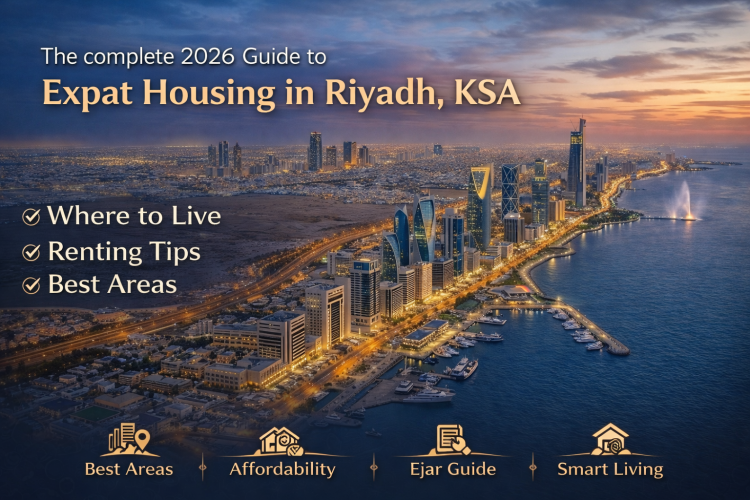
There’s a moment, before a move, when everything feels suspended. You haven’t left yet, but you’re already imagining where you’ll wake up. In a city like Riyadh, that question—where should you live—becomes practical very quickly.
Expat housing in Riyadh is not just about finding an apartment. It’s about locating yourself inside a city that is expanding faster than most people can understand at first.
Why Riyadh Feels Different in 2026
Riyadh doesn’t unfold slowly. It accelerates.
- The city is growing due to the RHQ program, drawing global companies into its center
- Demand for expat housing in Riyadh has increased sharply
- High-quality units appear and disappear within hours
There’s a certain quiet pressure to decide quickly. People who arrived recently often say the same thing: they didn’t expect the market to move this fast.
Using platforms like Wasalt to search for expat housing in Riyadh near your office isn’t just convenient—it’s necessary.
Where Expats Live in Riyadh
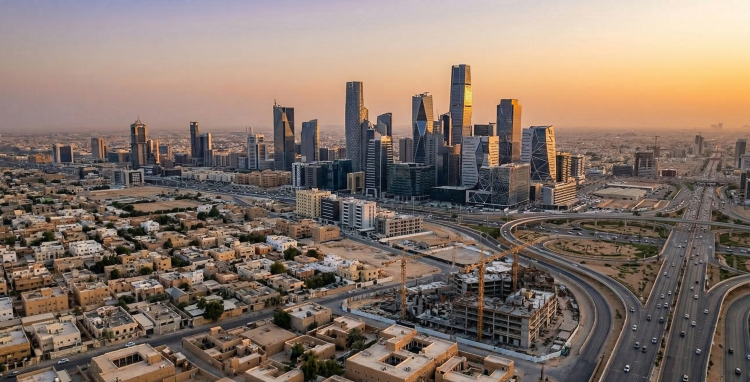
Most conversations about where expats live Riyadh tend to circle back to the north. Not because it’s perfect, but because it works.
Why North Riyadh
- Proximity to business hubs like KAFD
- Access to international schools
- Modern infrastructure
- New apartments for rent in Riyadh
- Cafes, restaurants, and social spaces
There’s a logic to it. Commute first, lifestyle second.
Popular Areas for Expat Housing in Riyadh
Al Yasmin — Balanced, Social, Slightly Demanding
People choose Al Yasmin because it feels manageable.
- Strong demand for 2-bedroom units
- Popular with young professionals
- Good balance of work and social life
But there are small details that matter:
- Some landlords request a kafeel (guarantor)
- Always confirm before paying Arboon
Al Malqa — Close to Work, Close to Everything
If you work near KAFD, this is where things begin to narrow.
- Premium expat housing in Riyadh
- Limited availability
- Heavy traffic during peak hours
Apartments don’t stay listed for long. Sometimes not even a full day.
Al Sahafa — Established and Quietly Practical
This disrtict less talked about, but people stay once they move here.
- Walkable amenities
- Clinics and supermarkets nearby
- Reliable infrastructure
There’s a sense of ease, though parking can be an issue in older buildings.
Al Aqiq — Growth You Can Feel
This is where infrastructure meets speculation.
- Close to Riyadh Metro
- Strong rental growth
- Popular for newer apartments for rent in Riyadh
It’s not just where people live—it’s where they expect the city to go.
Compound vs Apartment Living
When searching for expat housing in Riyadh, the decision often becomes binary. Waitlists for premier compounds in 2026 can stretch from 6 to 18 months. What many newcomers are not told is that even after a year on a waitlist, some compounds prioritize families over single professionals. According to Numbeo Riyadh, the “lifestyle premium” for a compound can increase your monthly costs by 40% when factoring in mandatory social fees and slightly higher utility rates.
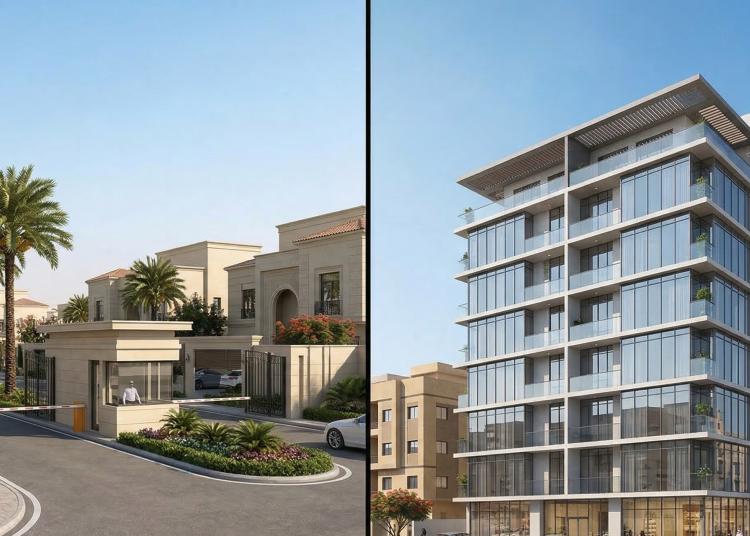
Compounds
They are contained environments. Predictable.
- Pools, gyms, security
- Social communities
- Western-style living
But:
- 2–3x more expensive
- Waitlists can reach 6–18 months
- Often prioritize families
Apartments for Rent in Riyadh
More open. Less controlled.
- Lower cost
- More availability
- Located within the city itself
Modern buildings now include:
- Smart systems
- Fiber internet
- Private parking
For many, this version of expat housing in Riyadh feels more sustainable.
Important Advice for Expats Renting in Riyadh
Choose Location Based on Commute
Traffic in Riyadh can be heavy, so proximity to work is essential. Agents working in this area suggest doing a “dry run” of your commute at 7:30 AM on a Sunday (the start of the work week) before signing. The Riyadh area guide can help you identify “back-road” access points that avoid the main highway congestion.
Move Quickly on Good Units
The best apartments often get rented within days. Setting up alerts on the Wasalt property platform is the most reliable way to be notified the moment a qualifying unit becomes available. The Arboon (reservation deposit, typically 5–10% of annual rent) is usually non-refundable if you back out after the landlord takes the unit off the market—ensure your financing is ready before paying this.
Verify the Contract
Always ensure the contract is officially registered in Ejar. Verify that the landlord’s name on the Ejar portal matches the Hawiyya (Saudi national ID) they presented. Listings on Wasalt are verified for Ejar compatibility, reducing the risk of signing an unregistered contract.
What Rent Costs in Riyadh (2026)
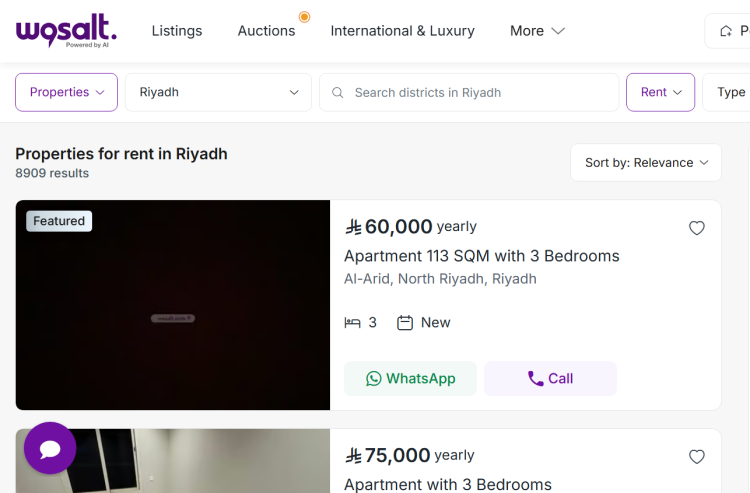
There’s no single number, only ranges. According to CBRE Saudi Arabia, rental price growth in prime North Riyadh districts has slowed to approximately 3-5% annually as of Q1 2026 as new supply enters the market. However, for new residential projects in Riyadh, prices often sit at the higher end of these ranges due to “smart” features. For a detailed breakdown of local utility costs, expats often reference Numbeo, which lists average monthly electricity and water for an 85m² apartment at approximately 450–700 SAR, depending on AC usage.
Typical Prices in North Riyadh
- 1-bedroom: 60,000–85,000 SAR/year
- 2–3 bedrooms: 80,000–130,000 SAR/year
Luxury compounds exceed this, often significantly.
The Reality of Searching for Housing in Riyadh
Finding expat housing in Riyadh is less about browsing and more about timing.
What Helps
- Set alerts on property platforms
- Be ready to pay Arboon (5–10%)
- Keep documents prepared
Because once a good unit appears, it doesn’t wait.
What Expats Often Learn Too Late
Some things aren’t written clearly in most guides.
- Your commute will shape your experience more than your apartment
- The best units are gone within days
- Not all listings are Ejar-compliant
Always verify:
- Contract registration
- Landlord identity
- Ownership documents
This is where expat housing in Riyadh becomes less theoretical and more personal.
Final Thoughts
There isn’t one correct way to approach expat housing in Riyadh. Some people choose compounds for familiarity. Others choose apartments for independence. What matters is understanding how the system works, and how quickly it moves. Because once you arrive, the question changes. It’s no longer where should you live. It becomes: how soon can you decide.
Frequently Asked Questions
1. Is the Ejar system mandatory for expats in Saudi Arabia?
Yes, the Ejar system is mandatory for all residential rentals in Saudi Arabia, including expat housing in Riyadh. It is the official government platform for registering lease contracts. Without an Ejar contract, you cannot access essential services like utilities, school registration, or legally protected tenancy rights.
2. How do expats pay rent in Riyadh in 2026?
Rent payments in Riyadh must be made through the Ejar platform using approved channels like SADAD or Mada. Cash payments or direct bank transfers to landlords are not legally recognized. This ensures all transactions are documented and enforceable under Saudi rental laws.
3. What documents do expats need to rent an apartment in Riyadh?
To rent an apartment in Riyadh, expats need a valid Iqama (residency permit), a mobile number linked to Absher, and supporting documents like a passport copy and salary certificate. The landlord provides their national ID (Hawiyya) and property details for Ejar registration.
4. How long does it take to find an apartment in Riyadh?
Finding expat housing in Riyadh typically takes 2–4 weeks due to high demand, especially in North Riyadh. However, once a property is selected, the lease process can be completed within 24–48 hours if all documents are ready.
5. Can expats rent property in Riyadh without an Iqama?
No, expats cannot legally rent property in Riyadh without a valid Iqama. An active residency permit is required to register a lease through the Ejar system. Most newcomers stay in hotels or serviced apartments until their Iqama is issued.
6. What is Arboon in Riyadh real estate?
Arboon is a reservation deposit, usually 5–10% of the annual rent, paid to secure a property in Riyadh. It is typically non-refundable if the tenant decides not to proceed after the landlord removes the listing from the market.
7. What is the difference between compounds and apartments in Riyadh?
Compounds are gated communities designed for expats, offering amenities like pools, gyms, and security, along with a Western-style lifestyle. Apartments are located in local neighborhoods and are more affordable. In 2026, many expats prefer modern “smart” apartments in North Riyadh for better value.
8. How much more expensive are compounds in Riyadh?
Compounds in Riyadh can cost up to 2–3 times more than regular apartments, depending on location and amenities. The higher cost reflects added services such as security, maintenance, and recreational facilities, making them popular among families and corporate tenants.
9. What happens if you break a lease early in Riyadh?
If you break a lease early in Riyadh, you are usually responsible for paying the remaining rent unless your contract includes an exit clause. Some landlords may allow early termination if a replacement tenant is found, but this depends on the agreement registered in Ejar.
10. How competitive is the rental market in Riyadh?
The Riyadh rental market is highly competitive, especially for expat housing in North Riyadh. High-quality apartments can be rented within days—or even hours—of listing. Expats are advised to act quickly and have their documents and deposit ready.





Discussion about this post